
When a Tip Is More Than a Tip?
When a Tip Is More Than a Tip? Navigating the Modern Tipping Culture
If there’s one thing that can make even seasoned travellers pause mid-meal or get them doing an internet search for Top Tips, it’s the question of tipping.
Once a simple gesture of appreciation, tipping has become a complex dance of percentages, expectations, and, yes, frequent confusion.
In recent years, there’s been a noticeable push-back against tipping, especially in certain service areas like cruises and even some restaurants. At the same time, tipping expectations (particularly in the United States) seem to be creeping ever higher. What was once a polite extra feels more and more like an unwritten rule… and sometimes a pressure!
Why the big push- back? A few reasons include:
Tipping feels mandatory, even when it’s described as “suggested”
The amounts expected have risen over the years
Some travellers feel they already paid a premium price and don’t want extra costs
Many people simply don't understand the salary/wage models used by different countries/industries and therefore don't 'get' the impact on staff. Saying the employer should be paying a decent wage is all well and good - I don't think any of us disagree but it's simply not a reality in many countries.
Let’s unpack what’s going on with tipping these days.

Tipping on Cruises: A Growing Debate
Cruise holidays are all-inclusive in so many ways - cabins, meals, entertainment… yet tips often sit outside what you’ve already paid. Traditionally, cruise lines have suggested a daily tip amount per passenger for the hardworking crew who keep everything running smoothly. On some cruise lines, tipping is now automatically added to your bill unless you opt out. This “auto-gratuity” approach aims to ensure staff are fairly rewarded, but for travellers unfamiliar with the practice it can feel surprising and on social media you'll see lots of discussions these days pushing back and talking about how to take these off your bill at Guest Services.
The reality is very often the 'auto-gratuity' model goes towards the pay of many staff groups on the ship like it or not, and by removing them and tipping who you feels deserves it means the behind the scenes staff end up out of pocket. You may tip your waiting staff, bar staff and room attendant but what about all the other people who create the experience you get.

In the United States, Tips Are Expected - A Lot!
Across the Atlantic, tipping is a deeply embedded part of service culture in the United States. Unlike in the UK - where tipping is appreciated but not always expected - many service roles in the US also rely heavily on tips as part of wages. The US does have a federal minimum wage of $7.27 per hour (yeah, do the maths on that!) However, a lower minimum cash wage of $2.13 per hour is allowed, provided that tips bring the total hourly earnings to at least $7.25 and then you have to factor in the 'tipping out' model which refers to the practice where servers share a portion of their tips with support staff, such as table clearers (bussers), bartenders, hosts, and food runners ho helped facilitate the service. If they don't tip out their team, they don't get good service and in turn it's hard to give you good service. It's really not as easy as 'treat me well, I'll tip you' and that tip being a bonus for the server.
See why tips are such a big thing in the US?
It’s common to see recommended tip percentages like 15–30% at restaurants with extra for exceptional service. For many visitors from outside the US, this can feel overwhelming. At times, it seems like there’s a suggested tip for everything! Add it all up, and the bill can go from reasonable to eye-wateringly higher in a flash.
This has also sparked plenty of discussion online with outrage at the social media posts being made claimingto be by waiting staff about their tip expectations. Have you seen this one?
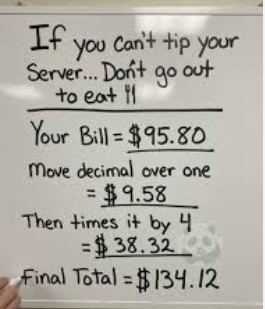
Worldwide Tipping Habits: A Quick Snapshot
Tipping culture varies widely around the world - and travelling internationally can feel like tip etiquette bingo:
Japan: Tipping is not customary and can even be confusing. Exceptional service is simply part of the experience.
Parts of Europe: Tipping is usually a small gesture - perhaps rounded up to the nearest €, drop your spare change or a few extra euros — but not a strict percentage.
Australia and New Zealand: Tipping is appreciated but not expected; service charges are less common.
Mexico & Latin America: Tipping can be expected in many service settings, though customs vary by country.
For UK travellers, this can be both interesting and bewildering. You might go from tipping generously at a Miami steakhouse right into Japan, where that same tip might leave staff puzzled.
So What’s the Verdict?
Tipping has evolved into something more than just a “thank you.” It reflects cultural norms, economic structures, and sometimes, deeply ingrained expectations. Whether it’s the rising suggested tips on cruise ships, the high percentages in the US, or the wide range of habits around the world, travellers today increasingly have to think about when, how much, and why they tip.
And let’s be honest - that feels like a lot to keep track of while you’re trying to enjoy your holiday!
What Do You Think?
Have you ever felt confused or pressured by tipping expectations on a cruise, would you remove the auto-tips if you could, do you tip big in the US or keep to your UK tip approach? Do you think tipping expectations are getting out of hand? Should tipping be more standardised, or is it a personal choice? Share your thoughts on all things tips below!